


Our wine list in Costa Adeje: from the volcano to Champagne (spoiler: there's a bottle for every path)
A good wine list is like a good host: it has to know how to welcome everyone. The one after a proper Rioja, the way it’s always been. The one celebrating with Champagne. The curious one who wants to try something that exists nowhere else on Earth. And the one who only knows they fancy a cold white while looking at the sea.
Our cellar is built for all of them. From the volcanic soils of the Canary Islands to the great houses of Champagne, by way of Ribera del Duero, Rioja, Toro and Provence. Let us show you around.
Whites: the kings of the house
When the main event is a seafood rice dish, white wine isn’t an option: it’s the natural path. That’s why it’s the deepest section of the list, and the most ours: almost all of it is Canarian. Listán blanco in all its forms — from the fresh, direct Tágara to Vidonia, a single-plot wine that holds its own among Spain’s great whites — volcanic malvasía from Lanzarote, albillo criollo, and rarities like marmajuelo or La Gomera’s forastera.
Prefer familiar territory? A Chardonnay or the Tamerán verdelho — the project of David Silva, yes, that David Silva — will take your hand before you cross over to the volcanic side.
Reds: from Vega Sicilia to the volcano
White may rule here, but red is far from benched. The list brings together names that need no introduction: Vega Sicilia Único, Valbuena, the Protos range from Ribera del Duero, the greats of Toro — Numanthia, Pintia, Termanthia — and even a Château Margaux for the occasions that make history.
And alongside them, the reds of these islands: high-altitude listán negro, carbonic maceration from Tacoronte-Acentejo and baboso negro from Abona. Atlantic reds, fresh and light, which — spoiler within the spoiler — work far better with a rice dish than you’d imagine.
Bubbles and rosés: celebration mode
By the sea, bubbles taste different. We carry the great houses of Champagne — Moët & Chandon, Ruinart, Dom Pérignon — brut nature cava and a local gem: Altos de Trevejos, sparkling wines from listán grapes grown at over a thousand metres up in Abona.
And for long terrace afternoons, textbook rosés: from Provence’s Whispering Angel and AIX to the rosés of Rioja, Ribera and Navarra. The colour of holidays exists, and it’s served cold.
The one thing you won't find anywhere else: Canarian wine
If anything sets this list apart, it’s the island chapter. The Canaries are a wine territory unlike any other, for three reasons that simply can’t be copied: soils of ash and lava, which give an unrepeatable minerality; pre-phylloxera vines, growing ungrafted as Europe hasn’t seen in over a century; and a handful of grapes that exist only here. Drinking Canarian wine is, quite literally, drinking a landscape.
Our advice: save at least one bottle of the meal for a surprise. The grapes you’ve never heard of are the reason this list exists.
The pairing that rules:
wine and rice
This isn’t theory, it’s daily practice. A well-chilled volcanic white cleanses the palate between spoonfuls of a seafood rice. A full-bodied malvasía stands up to a scarlet prawn rice without breaking a sweat. A Provence rosé is the perfect all-rounder for tables where everyone orders something different. And bubbles turn any paella pan into a celebration.
Our favourite move? Soupy lobster rice, a dry volcanic malvasía and an unhurried sobremesa looking out over Playa de Troya. Take a look at our rice menu and ask the team: they know which bottle belongs with each paella pan.
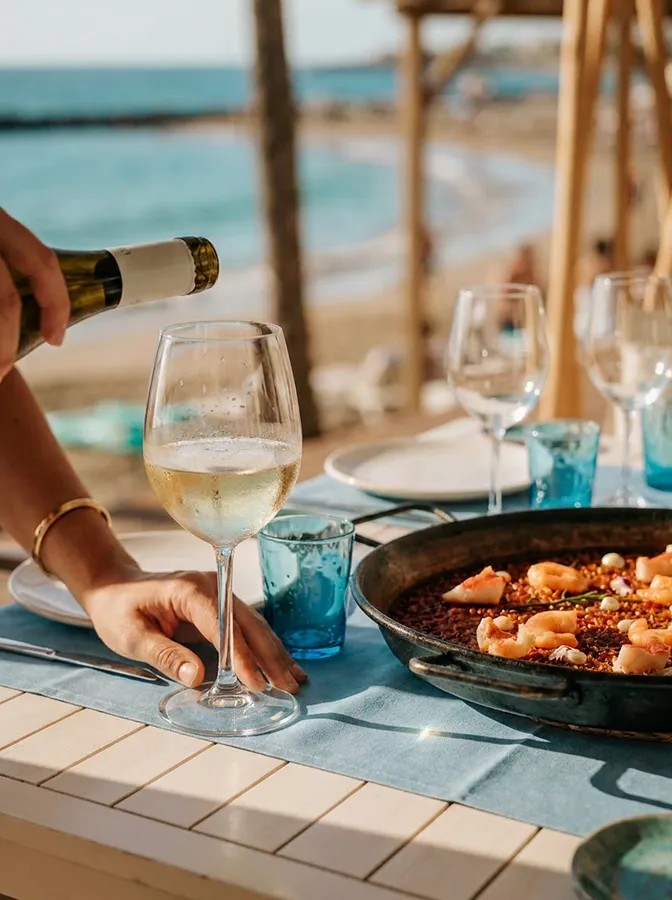
House tips for choosing a bottle
Say how you like it, not which label.
“A dry, fresh white” or “a soft red” says more than any name. Give the team that, and they’ll get it right.
Ask for the story.
Behind every bottle there’s a landscape: century-old vines, craters dug into ash, wineries with centuries of history. Wine tastes better when you know where it comes from.
Be brave at least once.
Your usual Rioja will still be there tomorrow. La Gomera’s forastera might not.
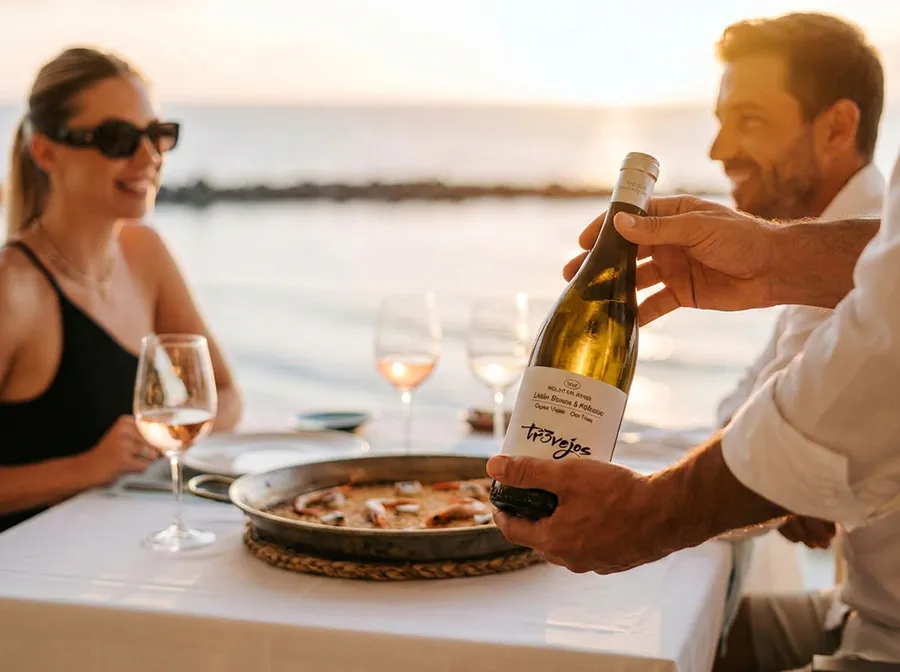
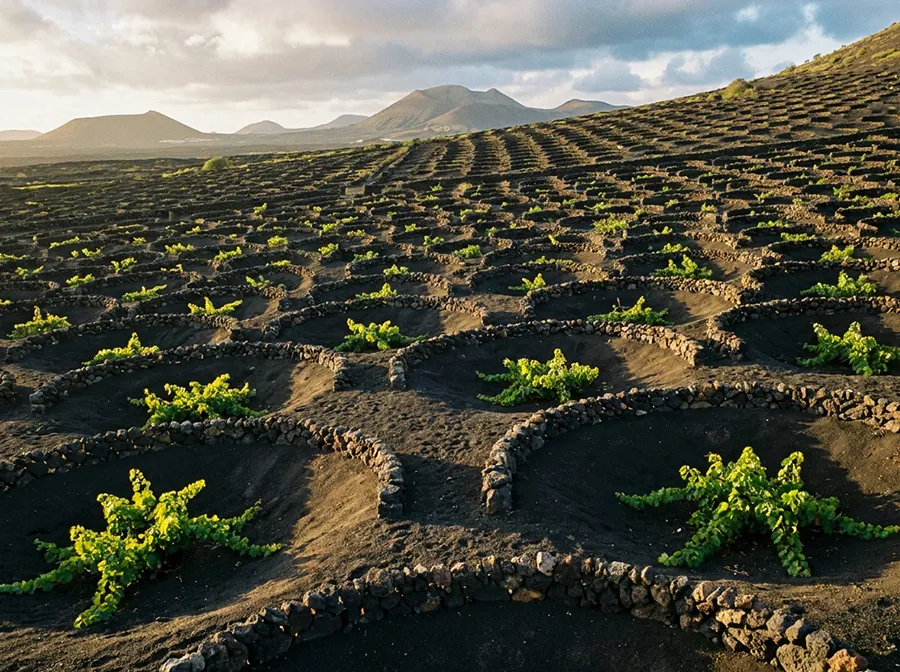
The volcanic vineyard of La Geria in Lanzarote, craters in the ash and stone walls: this is where the volcanic malvasía waiting at your table is born.
Come and raise a glass:
(this isn't something you tell, it's something you uncork)
We could keep writing about our wine list in Costa Adeje, but wine isn’t for reading: it’s for drinking. You’ll find us at Playa de Troya, inside Monkey Beach Club. Book your table, order a rice dish and let the cellar do the rest.
Bésame Mucho — rice dishes, good wine and kisses to the palate, facing the sea in Costa Adeje.
FOLLOW US AND TELL US ABOUT YOUR EXPERIENCE